Crops
Fall Armyworm Ravages Maize in Kurunegala, Threatening Farmers and the Price of Eggs and Chicken Fall Armyworm Ravages Kurunegala Maize
Farmers say the caterpillar known locally as 'Sena' is stunting crops in four areas of the district. Researchers say a low-cost package of measures can control it; a poor harvest would mean more costly imports of animal feed.

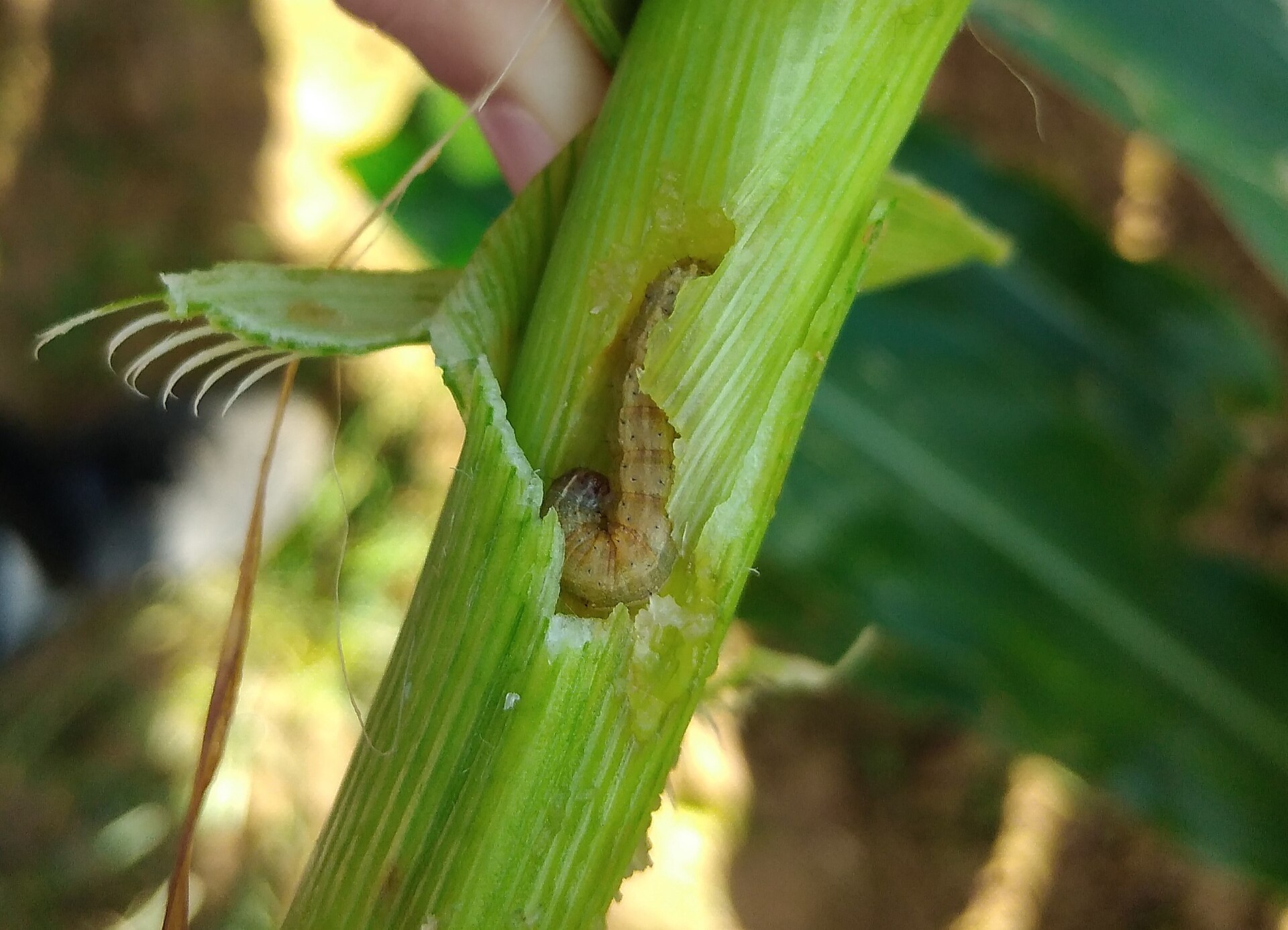
A caterpillar that has plagued Sri Lankan farmers since 2018 is again destroying maize crops in Kurunegala, and farmers' representatives warn that a poor harvest would push up the cost of feeding chickens and, with it, the price of eggs and meat.
The fall armyworm — known in Sinhala as the 'Sena' caterpillar, and to scientists as Spodoptera frugiperda — is damaging maize in Galgamuwa, Mahawa, Daduwellewa and Makulewa, according to the National Agrarian Union. The union's president, Anuradha Tennakoon, told the newspaper The Morning that the caterpillar was stunting the growth of plants even where farmers had applied fertiliser and pesticides, and that the harvest could fall sharply if the infestation spread.
The Field Crops Research and Development Institute, the state body responsible for crops such as maize, says it has introduced a package of measures that can prevent most of the damage if farmers follow it from the start of the season.
An unwelcome arrival
The fall armyworm is native to the Americas. It spread to Africa in 2016 and reached South Asia two years later, carried by moths that can fly long distances on the wind. It was first detected in Sri Lanka in 2018, in Ampara district, and is believed to have arrived naturally from India. In its first season, it caused serious losses: the Department of Agriculture estimated at the time that half or more of that season's maize crop had been affected.
The caterpillar feeds on the leaves and growing points of young maize plants and bores into the cobs of older ones. It has many host crops, but maize is its favourite. Its moths lay hundreds of eggs at a time, and several generations can develop in a single season, which is why infestations can build up quickly.
Since 2018, farmers have faced it every year. Mr Tennakoon said that the Department of Agriculture had not yet introduced a pesticide capable of eliminating the pest altogether.
Researchers say it can be controlled
The Field Crops Research and Development Institute disagrees that farmers are helpless. Its Additional Director, M.J.M.P. Kumararathna, told The Morning that the institute had introduced a package of measures to prevent the damage and was working to make farmers aware of it.
The package starts at land preparation and includes keeping the recommended spacing between plants and applying the appropriate control measures at the right stage of the caterpillar's development, she said. Following it closely could minimise and prevent damage, and did not require significant spending. Growing maize without following the package was not advisable, she added.
Experience elsewhere supports the approach. Research in Africa and Asia has found that early detection, careful timing of sprays when caterpillars are young, and practices such as clearing crop residues and planting at the same time as neighbouring farms can keep losses low. Pesticides applied late, when caterpillars are large and hidden deep inside the plant, tend to be wasted.
The Food and Agriculture Organization of the United Nations, which has led a global campaign against the pest, recommends that farmers walk their fields regularly from the first weeks after planting, looking for egg masses and the small 'windows' young caterpillars scrape in the leaves. Natural enemies, such as parasitic wasps, ants and birds, kill many caterpillars, so broad-spectrum sprays that wipe out these allies can make matters worse. Where pesticides are needed, the advice is to use recommended products at the recommended dose, aimed at the funnel of the plant where the caterpillars feed.
Why a pest in Kurunegala matters in Colombo
Maize is grown mainly in the dry zone, in districts such as Anuradhapura, Monaragala, Ampara and Kurunegala, during the Maha season that runs from October to March. Mr Tennakoon said the crop now covered more than 75,000 hectares.
Most of the harvest goes into animal feed. Maize is the largest single ingredient in feed for chickens, and so in the cost of producing eggs and chicken. When the local crop falls short, feed makers must import maize, and since imports are taxed heavily to protect local growers, the cost of animal products rises. Mr Tennakoon said that one reason meat and eggs were already expensive was that maize had to be imported under heavy taxes.
The country's annual requirement has been put at about 600,000 tonnes, more than local farmers normally produce. Sri Lanka imported 333,000 tonnes of maize in 2025. This year, imports fell steeply after the special levy on maize was doubled from Rs 25 to Rs 50 a kilogram; in the first seven months of 2026, they were 64% lower than a year earlier.
In March, the Cabinet decided that registered feed manufacturers and importers should be allowed to bring in maize only when the local harvest was not available, and approved up to 15,000 tonnes of imports for Thriposha, the nutritional supplement given to pregnant mothers and young children. The Morning reported this week that 2,000 tonnes of maize imported for Thriposha production were still being held at the port.
A difficult season ahead
The current Maha crop will be harvested from early next year. If the infestation in Kurunegala spreads and yields fall, feed makers are likely to press for permission to import more maize, setting up a familiar clash between grain farmers, who want imports restricted, and poultry producers, who want cheaper feed.
For now, the advice from the research institute is clear: follow the recommended package from the first day of the season, check fields often, and act early. For farmers already battling the caterpillar this season, the coming weeks will decide whether the damage can be contained.