Electricity
Curbs on Rooftop Solar Could Bring Back Power Cuts Next Year, an Energy Specialist Warns Rooftop Solar Curbs Risk Power Cuts, Expert Warns
Asoka Abeygunawardana says discouraging new rooftop panels will leave the country leaning on expensive fuel-fired plants in the dry months of February and March. Making each household buy its own battery, he says, would cost three times as much as storage on the grid.

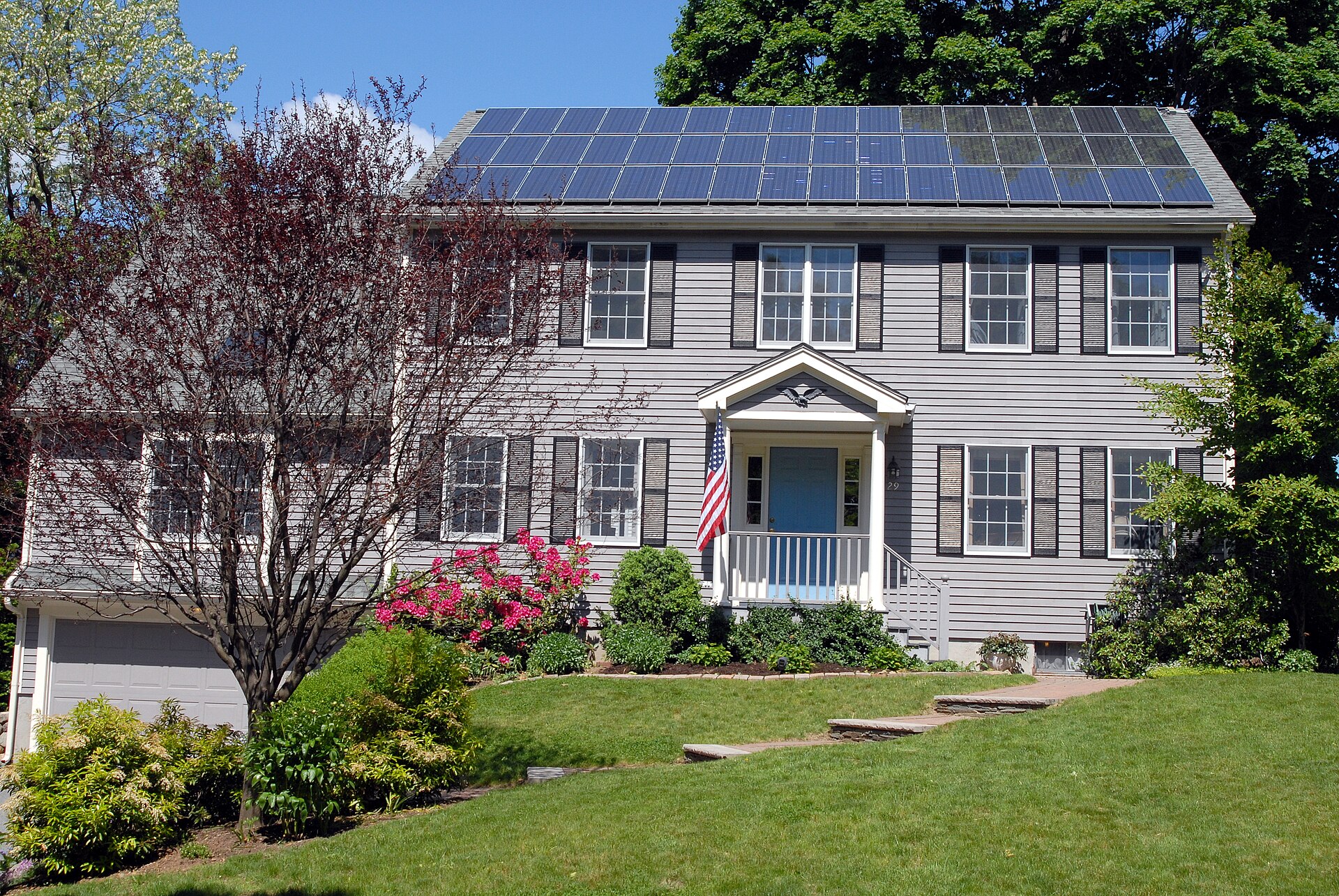
Sri Lanka could face electricity shortages and power cuts from next year because of government measures that slow the spread of rooftop solar panels, according to one of the country's best-known energy specialists.
Asoka Abeygunawardana, a renewable energy specialist and long-standing commentator on the power sector, warned that discouraging rooftop solar generation would force the country to rely on expensive fuel-fired power plants, particularly in the dry months of February and March, when reservoirs run low and hydropower output falls.
He also argued that requiring households to install their own battery systems could cost about three times more than building central storage facilities managed by the National System Operator, the body that now runs the country's electricity grid.
A success that became a problem
Rooftop solar has been one of Sri Lanka's energy success stories. Encouraged by generous tariffs under the 'Surya Bala Sangramaya' programme launched in 2016, and later by the steep rise in electricity bills during the economic crisis, homes, offices and factories rushed to install panels. By the end of 2025, according to the Ceylon Electricity Board, the country had about 1,935 megawatts of rooftop solar spread across 108,979 connections — more than its largest power station.
The trouble is timing. Solar panels produce most of their power around midday, when demand is relatively low, and none at night, when demand peaks. On sunny days with low demand — public holidays, for example — rooftop panels can supply so much of the electricity on the grid that engineers struggle to keep it stable, because large conventional generators, which help steady the frequency of the system, have to be turned down.
That challenge has shaped recent policy. A Cabinet paper, Mr Abeygunawardana noted, raised concern that rooftop solar had grown faster than the Electricity Board had expected, and that the system was not equipped to store surplus daytime power for use at night. The authorities have since tightened the terms for new connections.
New rules for new panels
In August, the Public Utilities Commission of Sri Lanka approved a new set of tariffs that includes payments for solar systems paired with batteries, so that stored power can be sold to the grid in the evening. But the battery-linked tariffs apply only to larger systems, above 250 kilowatts. The regulator also told the Electricity Board and Lanka Electricity Company to publish the spare capacity on local transformers each month, and to allow new systems to connect on a 'zero export' basis — supplying only the building they sit on — where the local network is full.
For a typical household, the effect is that installing rooftop solar has become less attractive than it was, and selling surplus power to the grid harder to arrange. That is the slowdown Mr Abeygunawardana is warning about.
Why the dry season matters
Sri Lanka's electricity comes from three main sources: hydropower from reservoirs in the hills, coal from the Lakvijaya plant at Norochcholai, and oil-fired plants, with a growing share from solar and wind. In a good monsoon year, hydropower can supply a large part of demand. But in the dry months, the reservoirs fall and the gap must be filled by oil, the most expensive source of power and one that must be paid for in dollars.
Rooftop solar helps most in exactly those months, when the sun is strong and water is scarce. Mr Abeygunawardana's argument is that every megawatt of rooftop capacity not built now is a megawatt that must be met by burning imported fuel later — at a time when oil prices have been driven up by the conflict in the Middle East — or, if fuel plants cannot meet demand, by scheduled power cuts of the kind Sri Lanka last endured during the 2022 crisis.
Batteries: at home, or on the grid?
Storage is at the heart of the dispute. The authorities want new rooftop systems, especially larger ones, to come with batteries, so that they do not flood the grid at midday. Mr Abeygunawardana argues that this is the costliest way to add storage. Requiring individual households to install batteries, he said, could cost around three times more than installing centralised storage through the National System Operator.
He has also argued against tax concessions for household batteries, on the ground that buying storage in many small units would cost the country far more in foreign exchange than installing it at the level of the distribution network. Instead, he has called for solar panels on every suitable rooftop by 2035, backed by pumped-storage hydropower and equipment on the distribution network to keep the grid's frequency stable.
The government does plan large-scale storage. Under its plans, about 1,240 megawatts of battery capacity, able to store 4,660 megawatt-hours, is to be installed on the grid by 2029. Critics say that is welcome but not enough on its own, because the bottleneck is often the local distribution network, not the national grid.
What happens next
Officials have previously linked rooftop solar to the grid instability behind the island-wide blackout of February 2025, a claim Mr Abeygunawardana has disputed; he has blamed failures at coal plants for past blackouts.
The coming dry season will be an early test. If rainfall in the first months of 2027 is poor, the system will lean heavily on fuel-fired plants, and the cost — passed on through electricity tariffs, or absorbed by the state — will depend on the price of oil. The question raised by Mr Abeygunawardana's warning is whether limiting cheap solar power today will make that bill larger tomorrow.